
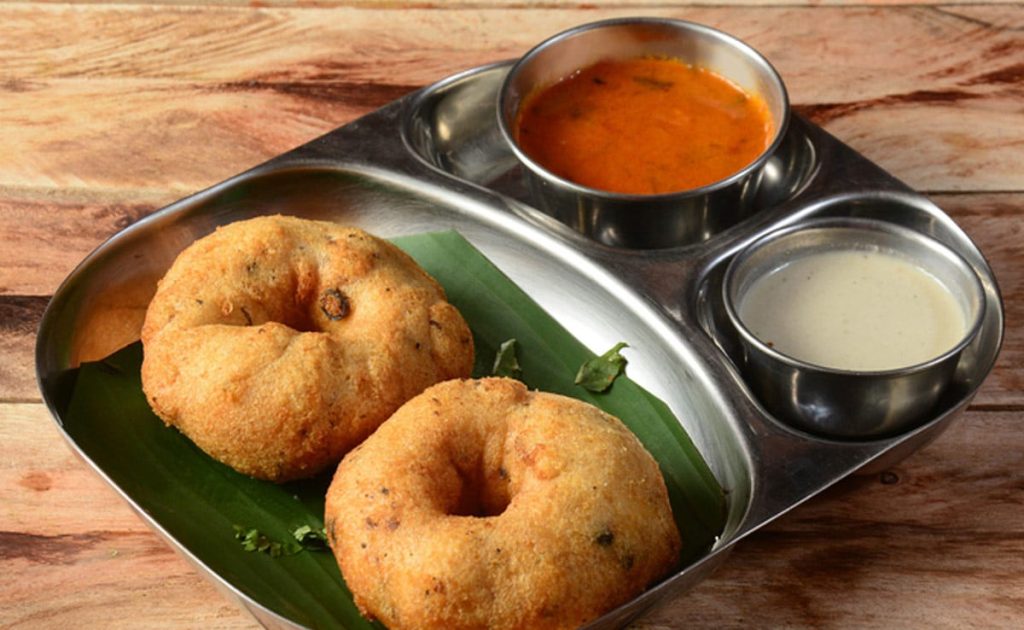
Vada, the beloved South Indian snack, is much more than just a crispy, golden delight—it’s a timeless comfort food that captures hearts (and appetites) across India and beyond.
Imagine biting into a perfect medu vada: the exterior is irresistibly crisp and crunchy, fried to a beautiful golden-brown perfection, while the inside remains wonderfully soft, fluffy, and almost spongy—like a savory cloud with a subtle, airy texture. Made primarily from fermented urad dal (black gram), it carries a mild, nutty flavor that’s elevated by hints of ginger, black pepper, curry leaves, cumin, and sometimes green chilies or asafoetida. When paired with steaming sambar and creamy coconut chutney, every bite becomes a harmonious explosion of crispy, tangy, spicy, and soothing tastes that make it impossible to stop at just one.
Then there’s masala vada (or paruppu vadai), crafted from chana dal (Bengal gram). These are slightly denser and more rustic, with a satisfying crunchy bite packed with aromatic spices—onion, fennel seeds, ginger, chilies, and fresh curry leaves—giving them an intensely savory, almost addictive flavor profile that’s reminiscent of a spiced, fried falafel but distinctly Indian.
Why enjoying vada is actually quite rewarding
Beyond its irresistible taste and cultural charm, vada (especially when made traditionally) offers several genuine advantages:
- Plant-based protein power — Urad dal or chana dal delivers good-quality vegetarian protein (around 5–7g per medium piece), supporting muscle repair, energy, and overall satiety.
- Dietary fiber boost — With 2–5g of fiber per serving, it aids digestion, promotes gut health, and helps you feel full longer—making it a smarter choice than many processed snacks.
- Rich in essential nutrients — Provides iron (supports blood health and energy), B-vitamins (for metabolism), folate, and even some calcium.
- Fermentation bonus (especially in medu vada) — The soaked and fermented batter naturally develops probiotics, benefiting gut bacteria and digestion.
- Better blood sugar response — Studies show pulse-based vadas (like medu vada) often have a low to medium glycemic index (around 47–64) and low glycemic load, meaning they cause a gentler rise in blood sugar compared to many refined-carb snacks—great for steady energy without sharp spikes.
- Cultural & emotional comfort — Few things match the joy of hot vadas with family, during festivals, or as a rainy-day treat—pure soul food that nourishes both body and heart.
Of course, like any fried snack, vada is best enjoyed in moderation (the deep-frying adds calories and fat), but when savored mindfully—perhaps with extra sambar or dahi vada for a probiotic twist—it becomes a wholesome, flavorful part of a balanced Indian meal.
Next time you hear that sizzle from the kadai, go ahead—treat yourself to a vada. It’s crispy tradition, nutrition in disguise, and pure happiness in every bite!