
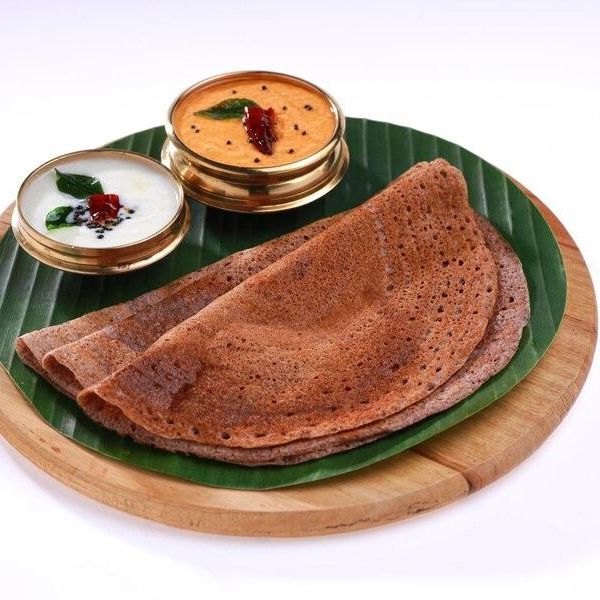
Dosa, the iconic South Indian crepe, is more than just a beloved breakfast staple—it’s a culinary masterpiece that beautifully marries crisp texture, subtle tanginess, and versatile deliciousness.
Imagine a large, paper-thin pancake made from a naturally fermented batter of rice and urad dal (black gram lentils), spread expertly on a hot griddle until its edges turn golden and shatteringly crisp, while the center remains lightly spongy and soft. That characteristic sour-tangy aroma from fermentation, combined with the satisfying sizzle as it cooks, makes every dosa experience almost theatrical. Whether enjoyed plain, folded into a perfect triangle, or rolled around a spiced potato masala filling (as in the world-famous Masala Dosa), it arrives steaming hot at the table alongside an array of vibrant accompaniments: coconut chutney, tomato chutney, spicy sambar, and sometimes podi (spiced lentil powder) drizzled with ghee.
But dosa is far more than just irresistibly tasty—it’s genuinely one of the healthiest and most balanced traditional foods you can enjoy regularly. Here are some of its standout advantages:
- Naturally fermented goodness → The overnight fermentation process creates beneficial probiotics that support gut health, improve digestion, and boost immunity—similar to yogurt or idli, but in a lighter, crispier form.
- Excellent nutrient bioavailability → Fermentation reduces phytic acid (an anti-nutrient) and significantly increases the absorption of important minerals like iron, calcium, and magnesium.
- Rich in B vitamins → Provides several B-complex vitamins that help with energy production, nerve function, and overall metabolism.
- Good source of plant-based protein → The combination of rice and urad dal creates a complete protein profile, making dosa especially valuable for vegetarians and vegans.
- Low-to-moderate calories & light on the stomach → A plain dosa typically ranges from 100–150 calories (depending on size and oil used), offering sustained energy from complex carbohydrates without feeling heavy.
- Easily digestible → Thanks to fermentation and the absence of heavy fats in its basic form, it’s gentle on the digestive system—ideal for breakfast or when you want something satisfying yet light.
- Highly customizable for health goals → You can make it with millets, oats, ragi, or quinoa for extra fiber and nutrients, keep oil minimal for weight management, or load it with vegetables for added vitamins.
In short, dosa isn’t just food—it’s smart, ancient nutrition wrapped in irresistible South Indian flavor. Whether you’re craving something crispy and comforting or looking for a nutritious meal that keeps you energized for hours, few dishes deliver taste, tradition, and genuine health benefits quite like a perfectly made dosa.