
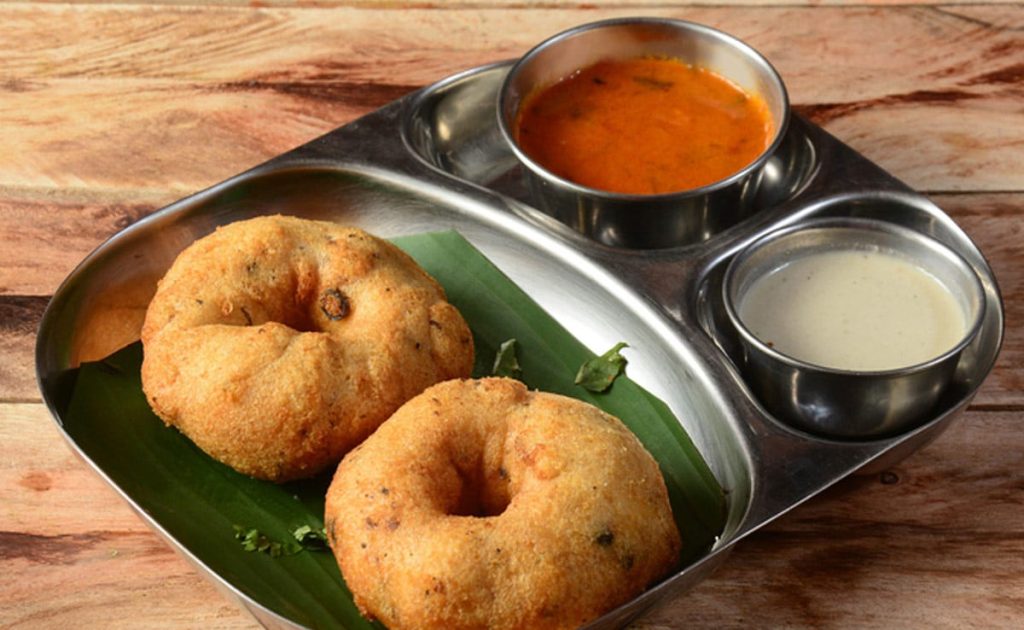
Vada is a popular savory, deep-fried snack (fritter) from Indian cuisine, especially beloved in South India but enjoyed across the country in various forms. It is often served as a breakfast item, evening snack, or street food, typically paired with coconut chutney, sambar, or other accompaniments.
Vada is made from a batter or dough of soaked and ground lentils (dal), shaped, and deep-fried until crispy on the outside and soft inside. The most iconic version is Medu Vada (also called ulundhu vadai or uddina vade), which has a doughnut-like shape with a hole in the center, made primarily from urad dal (black gram). Other common varieties include:
- Masala Vada (or Parippu Vada): Made with chana dal (split chickpeas) or toor dal, often spicier with onions, garlic, or herbs; popular in Kerala and Tamil Nadu.
- Dal Vada or Batata Vada: Potato-based (especially in Maharashtra for Vada Pav, where the spiced potato fritter is sandwiched in a bun/pav).
- Sabudana Vada: Made with sago pearls, often for fasting.
- Regional twists like Thavala Vadai (mixed dals and rice), Keerai Vadai (with spinach), or soaked versions like Dahi Vada (in yogurt) and Sambar Vada.
The basic preparation involves soaking urad dal (or other dals), grinding it into a fluffy batter with spices like green chilies, ginger, curry leaves, asafoetida (hing), and salt, then shaping and frying in oil. Fermentation in some recipes adds a light, airy texture.
In Hyderabad and Telangana (your region), you’ll commonly find Medu Vada with sambar and chutneys at tiffin centers, or variations in local South Indian eateries. Some brands like Narayan Prasadam Foods even offer vada premixes for restaurants and home use, often in no-onion-no-garlic or prasadam-style versions suitable for temple offerings.
Nutritional Profile (Approximate, per typical serving)
- Medu Vada (one piece, ~30g): Around 73 calories, with carbs (~12.5g), protein (~5g), and very low fat if minimally oiled; higher when deep-fried.
- Rich in plant-based protein (from urad dal), dietary fiber, iron, folic acid, magnesium, calcium, potassium, and B vitamins.
- 100g of vada can provide notable protein (around 12-13g) and fiber (5-6g+).
Vada Pav (street-style) is more calorie-dense (~260-290 kcal per piece) due to the bread and frying, offering carbs for quick energy plus some protein.
Advantages and Benefits of Vada
Vada isn’t a “superfood,” but when made traditionally and consumed in moderation, it offers several upsides thanks to its lentil base:
- Good Source of Plant-Based Protein: Urad dal provides high-quality vegetarian protein that supports muscle repair, satiety (feeling full longer), and overall nutrition—helpful for vegetarians.
- Dietary Fiber for Digestion: High fiber content aids bowel movements, improves gut health, promotes satiety, and may help manage cholesterol. When paired with vegetable-rich sambar, it adds even more fiber and antioxidants.
- Rich in Essential Minerals and Vitamins:
- Iron and folic acid: Support energy levels, prevent anemia (especially beneficial for women and kids).
- Magnesium and potassium: Aid immunity, mental function, and heart health.
- Calcium: Contributes to bone and teeth strength (enhanced in Dahi Vada with curd).
- Energy Boost and Ayurvedic Benefits: In traditional Ayurveda, dry vada (crispy version) is considered strengthening (balya), nourishing (brimhana), appetizing, and supportive of virility/energy. It can balance Vata dosha and is seen as growth-promoting. Urad dal’s low glycemic index (in the dal itself) can provide sustained energy compared to refined carbs, though frying adds calories.
- Versatility and Cultural Comfort: It’s a quick, satisfying snack that pairs well with balanced sides (chutney/sambar add vitamins). Soaked versions like Dahi Vada offer probiotics from curd, cooling properties, and bone-supporting calcium. Vada can be part of festive or temple prasadam in lighter forms.
- Potential for Healthier Twists: Home-made or air-fried versions reduce oil absorption. Adding veggies (spinach, etc.) or using mixed dals boosts nutrients and fiber.
A Balanced Note
While vada has these advantages from its lentil foundation, deep-frying makes it calorie-dense and higher in fats, so it’s best enjoyed occasionally (e.g., 1-2 pieces) rather than daily. Pair it with protein-rich or fiber-heavy sides to mitigate blood sugar impact, and opt for baked/air-fried versions for lighter enjoyment.
If you’re in Hyderabad and want to try or make it, local spots serve excellent Medu Vada, or you can experiment with premixes. It’s a tasty way to incorporate more lentils into your diet! Let me know if you’d like a simple recipe or specifics on a variety.