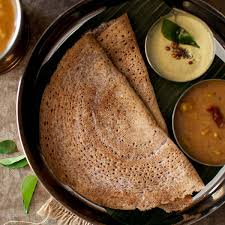
Dosa is a thin, crispy, savory crepe (or pancake) from South Indian cuisine, traditionally made from a fermented batter of rice and black gram lentils (urad dal), sometimes with fenugreek seeds added for flavor and fermentation. It originated in southern India, with references dating back over 1,000–2,000 years in ancient Tamil literature.
The batter is soaked, ground into a smooth paste, allowed to ferment naturally (which gives it a slightly tangy taste and airy texture), then spread thinly on a hot griddle (tawa) and cooked with a little oil until golden and crisp. It is typically served hot with coconut chutney, tomato chutney, sambar (a lentil-vegetable stew), or potato masala filling.
Popular Types of Dosa
- Plain Dosa (Sada Dosa): Simple, crispy, no filling — often folded or rolled.
- Masala Dosa: Filled with spiced potato-onion masala; one of the most loved varieties.
- Mysore Masala Dosa: Features a layer of spicy red chutney inside.
- Other variations: Onion dosa, rava dosa (semolina-based for extra crispiness), neer dosa (softer, rice-only from coastal Karnataka), paper dosa (extra thin and large), set dosa (thicker, soft pancakes), and modern fusions like cheese or schezwan dosa.
- Advantages and Health Benefits of Dosa
- Dosa is considered a nutritious, balanced meal when prepared traditionally. It is naturally gluten-free, vegetarian, and relatively light.
- Key nutritional profile (approximate for one medium plain dosa, ~35–80g serving; values vary by size and recipe):
- Calories: 70–170 kcal (low to moderate)
- Carbohydrates: 13–30g (mainly complex, providing sustained energy)
- Protein: 2–5g (from the lentil-rice combo; higher when paired with sambar/chutney)
- Fat: 1–4g (minimal if made with little oil)
- Fiber: ~0.6–3g
- Other: Good source of B vitamins (like thiamin, folate), iron, calcium, and minerals from black gram. No added sugars.
- Main advantages and benefits:
- Gut-friendly fermentation: The natural fermentation process creates probiotics (beneficial bacteria) that support digestion, reduce bloating, improve nutrient absorption, and promote a healthy gut microbiome. It acts like a mild probiotic food.
- Easy to digest: Fermentation breaks down complex carbs and reduces anti-nutritional factors, making it lighter on the stomach compared to many other breads or pancakes.
- Good for blood sugar management: Traditionally fermented dosa has a relatively lower glycemic impact (especially millet or whole-grain versions). It can help with steady energy release and may support insulin sensitivity when part of a balanced diet.
- Nutrient boost: Provides plant-based protein, fiber, and minerals. Pairing with sambar (lentils + veggies) or chutney adds more protein, vitamins, and fiber.
- Weight management friendly: Low in fat and calories (if not overloaded with ghee/oil or heavy fillings), filling due to fiber and protein, making it suitable for moderation in weight-conscious diets.
- Versatile and customizable: Can be made healthier with additions like millets, oats, spinach, or vegetables for extra fiber and nutrients. Great for breakfast, lunch, or light dinner.
- Cultural and practical perks: Quick to cook once batter is ready, affordable, street-food staple, and loved worldwide for its crispy texture and savory taste.
- Tips for maximum benefits:
- Use traditional overnight fermentation (avoid instant mixes if possible).
- Cook with minimal oil or ghee.
- Pair with vegetable-rich sambar and fresh chutneys rather than excessive coconut or fried accompaniments.
- Experiment with ragi (finger millet), oats, or quinoa dosa for added nutrition.
- Overall, dosa is a delicious, wholesome option that combines taste, tradition, and health — especially when enjoyed as part of a varied diet. If you’re in Hyderabad or anywhere in India, you’ll find excellent dosa at local eateries or can easily make them at home!