
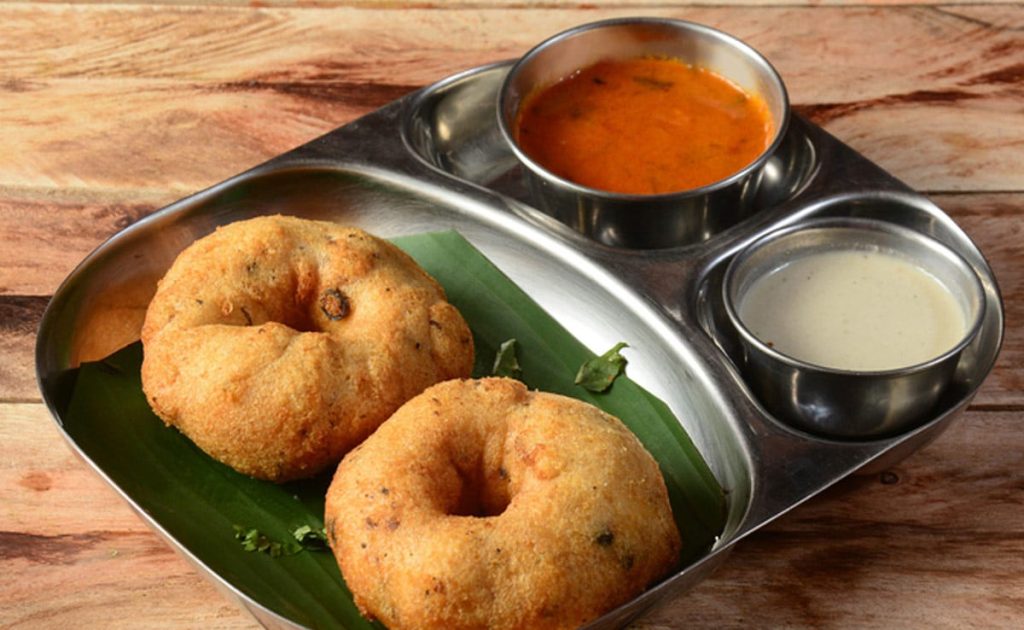
Vada is a popular savory fried snack from South Indian cuisine (also enjoyed across India). It comes in various forms like medu vada (doughnut-shaped, made from urad dal/black gram), masala vada/paruppu vada (made from chana dal), dahi vada (soaked in spiced yogurt), vada pav (Maharashtrian street food with potato filling in a bun), and others like sabudana vada or vegetable-based versions.
The classic medu vada is the most common reference—crispy outside, soft and fluffy inside, typically served with coconut chutney and sambar.
Main Types of Vada
- Medu Vada (Ulundu Vadai): Primarily urad dal (black gram), often with ginger, green chilies, curry leaves, and black pepper. Fermented batter gives it a light texture.
- Masala Vada (Paruppu Vadai): Made with chana dal (Bengal gram), onions, spices—crispier and flatter.
- Dahi Vada: Medu vada soaked in seasoned yogurt (dahi)—a cooling, tangy variation.
- Others: Sabudana vada (for fasting), banana flower vada, potato-based, etc.
Nutritional Profile (Approximate, per medium medu vada ~70-100g)
- Calories: 150–300 kcal (varies widely due to oil absorption; one piece often ~100-190 kcal).
- Protein: 4–8g (mainly from lentils).
- Carbs: 10–25g.
- Fat: 5–10g+ (from deep-frying).
- Fiber: 2–3g.
- Key micronutrients: Iron, folate, B-vitamins, magnesium, calcium, potassium (from urad dal or chana dal).
Fermentation in traditional medu vada batter improves nutrient absorption and adds mild probiotic benefits for gut health.
Advantages / Health Benefits
Vada draws its positives mainly from the lentil base (urad dal or chana dal), which are nutrient-dense:
- Good Source of Plant-Based Protein — Supports muscle maintenance, satiety (keeps you full longer), and is a vegetarian protein option. Urad dal provides decent protein quality.
- Rich in Minerals and Vitamins — High in iron (helps prevent anemia, good for women and kids), folate (beneficial for cell growth and pregnancy), B-vitamins (for energy metabolism and nervous system), magnesium (for immunity and mental function), calcium, and potassium.
- Digestive Support — Fiber aids bowel movement and regularity. Fermented urad dal in medu vada offers probiotics for gut microbiome health. In Ayurveda, certain vadas are considered energizing (balya), nutritive, and appetite-stimulating, while balancing Vata dosha (though they may increase Kapha if overconsumed).
- Energy Boost and Satiety — Lentils provide sustained energy. Dahi vada adds probiotics from curd, calcium for bone health, and can help control appetite or assist weight management in moderation (due to protein + curd).
- Other Potential Perks — Black gram (urad dal) is anti-inflammatory and supports nervous system health. Some versions (like with veggies) add extra fiber and nutrients. In traditional contexts, dry vadas are said to nourish the body and promote strength/virility when paired properly.
Versions like dahi vada gain extra benefits from yogurt (probiotics, cooling effect, bone support). Sabudana vada can provide quick energy during fasting and is gluten-free.
Important Considerations (Balanced View)
While vada has nutritional upsides from lentils, it is deep-fried, so it absorbs oil, making it calorie-dense and higher in fat. Regular or daily consumption can contribute to weight gain, digestive heaviness, or increased risk of issues like heart concerns if oil is reused or of poor quality. It is best enjoyed occasionally (e.g., 1-2 pieces as a treat) rather than as everyday food. Baked or air-fried versions at home can reduce oil significantly.
Tips for Healthier Enjoyment:
- Pair with sambar (for veggies, fiber, and antioxidants) and chutney.
- Opt for homemade with fresh oil and minimal frying.
- Choose dahi vada for a probiotic twist or masala vada for slightly more fiber (chana dal absorbs less oil sometimes).
- Moderation is key—portion control matters, especially if you’re watching calories or have conditions like diabetes or high cholesterol.
In short, vada is a tasty, culturally beloved snack that offers decent protein, fiber, iron, and B-vitamins from lentils, plus satiety and some digestive perks from fermentation. Its advantages shine when eaten mindfully as part of a balanced diet, not as a staple. If you’re in Hyderabad, you’ll find excellent medu vada at South Indian eateries or tiffin centers—enjoy it fresh and hot!
If you meant a specific type (e.g., medu vada, vada pav) or want recipes/nutritional tweaks, let me know for more details.